:::::::::::::::::::::::::::::::::::::::::::::::::::::::::::::::::::::::::::::::::::::::::::::::::::::
Kanban 看板 Shop Signs
We have been collecting traditional shop signs for more than six years now and we find them extremely decorative and attractive, but rather difficult to get these days.
You find the best information about Japanese shop signs in this wonderful book:
KANBAN, The Art of the Japanese Shop Sign
By Levy, Sneider and Gibney, Chronicle Books 1991.

I quote a few parts of it.
The shop signs had two functions, first to announce the business of the shop in an appealing manner and second to brave the weather, since they were mostly mounted outside the store, hung on the wall or put under a small roof. Usually they were not made for asthetic reasons, but were utilitarian in their concern. In their simplest form, no words were used. An illiterate public could not have read them: crossed radishes, a string of prayer beads, a vinegar cask was sufficient to convey the message.
In the beginning of the Edo period simple shapes and forms dominated, but later laquer, refined calligraphy, gold and ukiyo-e style images were also used. But signboards were not considered a traditional art form and most old signboards were replaced with shiny new metal and neon ones. Nowadays it is hard to find any good ones for sale any more in local antiques shops.
In Edo times, the kanban was a symbol to the merchant as important as the sword or military banner was to the samurai. The kanban he used to designate and decorate his stores shed an interesting light on Japan's economic history as it passed from feudal society to modern state.
.................................................................................
In the Daruma Magazine 13 there is an interesting article about
Pharmacy Shop Signs (Kamban)
by Takeguchi Momoko.
Look at the PHOTOS :
source : www.darumamagazine.com
:::::::::::::::::::::::::::::::::::::::::::::::::::::::::::::::::::::::::::::::::::::::::::::::::::::
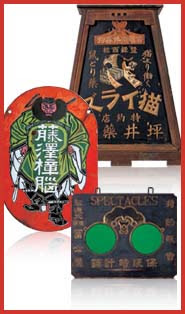
Click for more photos !
source : www.admt.jp/salon/collection
:::::::::::::::::::::::::::::::::::::::::::::::::::::::::::::::::::::::::::::::::::::::::::::::::::::
Special Kanban in Kyoto, 2018

珍看板、手足伸ばしたダルマ
京都市伏見区の「ダルマ屋印房」の4代目池上信一さん(56)に尋ねると「確かにダルマです」。
- reference source : kyoto-np.co.jp/local -
:::::::::::::::::::::::::::::::::::::::::::::::::::::::::::::::::::::::::::::::::::::::::::::::::::::
From the Daruma Museum Collection
Tea store

From a tobacco store

The connection to Tobacco and Daruma is less obvious.
Tobacco was introduced to Japan by Europeans in the mid-sixteenth century and it
spread fast. In a traveller's report from 1933 by James Scherer we find the following quote:
"Tobacco being conductive to contemplation, Daruma now enjoys immense vogue as the patron saint of smokers. His gloomy eyes and bearded jowls stare at you from all the Japanese tobacco shops; he has become the wooden Indian of Japan!"
The opening words in this account perhaps also identify the only plausible connection between Daruma and tobacco.
.......................................................................

- image from ebay -
kusuri くすり フジヤ medicine vendor Fujiya
:::::::::::::::::::::::::::::::::::::::::::::::::::::::::::::::::::::::::::::::::::::::::::::::::::
Some metal kanban from my friend Ishino
From Ito Silk Thread for sewing maschines


..........................................

Older version of the silk kanban
..........................................

Wood. 45 cm wide, 60 cm high
Maybe from the Meiji period.
Antiques with Daruma
MY ALBUM
:::::::::::::::::::::::::::::::::::::::::::::::::::::::::::::::::::::::::::::::::::::::::::::::::::::
Coca Cola Signboard from Nagano Olympics
My Backup Text
:::::::::::::::::::::::::::::::::::::::::::::::::::::::::::::::::::::::::::::::::::::::::::::::::::::
. Doing Business in Edo .
kanbanya 看板屋 vendor of shop sign

江戸土産-駿河町 - tatekanban 建看板 Tatekamban
- Look at more Kanban from Edo :
- reference : jti.co.jp/tobacco-world/journal -
:::::::::::::::::::::::::::::::::::::::::::::::::::::::::::::::::::::::::::::::::::::::::::::::::::::
. Shop signs with Dragons .
. Shop signs with Tengu 天狗 .
. Toys and Talismans from Japan .
[ . BACK to WORLDKIGO . TOP . ]
[ . BACK to DARUMA MUSEUM TOP . ]
- #kanban #kamban #shopsign -
:::::::::::::::::::::::::::::::::::::::::::::::::::::::::::::::::::::::::::::::::::::::::::::::::::::



 Posts
Posts



7 comments:
Kaohame
What few Japanese realize is that these fixtures of Japanese tourism were actually invented in the United States nearly 150 years ago. In 1874, an American illustrator named Cassius M. Coolidge applied for a patent on what he called "comic foregrounds," a canvas painted with a cartoonish scene that he marketed to professional photographers.
..... Ijichi found a publisher willing to publish his findings as a book. Then he hit a snag: the things didn't seem to have a name. So he made one up, taking the words "kao" ("face") and "hame," from the verb "hameru" ("to insert") and coining the new term: "kaohame." His book, "Zen Nippon Kaohame Kiko" ("All-Japan Kaohame Travelogue," OH! Bunko, 2001)
"kaodashi kanban"
MORE By ALICE GORDENKER
http://www.japantimes.co.jp/text/ek20120918wh.html
Matsuo Basho
戸の口に宿札名乗れほととぎす
to no kuchi ni yadofuda nanore hototogisu
at the front entrance
hang out your visitor sign -
hototogisu
MORE about the yado fuda
.
wooden shop sign of a brush maker 木製筆屋の看板
fudeya
.
mizuchaya no kanban musume 水茶屋の看板娘 "advertising servant girl"
signboard girl, they worked outside the shop, trying to attract customers.
.
http://edoflourishing.blogspot.jp/2013/12/chaya-tea-stall.html
.
getaya no kanban 下駄屋の看板 shop sign of a Geta store
and more about Geta
看板 with 鬼 Oni demons
.
https://omamorifromjapan.blogspot.com/2017/06/tengu-kanban-kamban.html
.
https://kappapedia.blogspot.com/2017/02/onipedia-demons-of-japan.html
.
吊り下げ看板 tsurisage kanban 吊下看板
shop signs hanging down
.
Post a Comment