:::::::::::::::::::::::::::::::::::::::::::::::::::::::::::::::::::::::::::::::::::::::::::::::::::::
Daruma-Ame だるま飴 Sweets on a Stick
This kind of sweet belongs to the type of Dagashi, cheap sweets, which originated in the Northern areas of Japan. During the winter season, the womenfolk would take rounds to prepare some homemade sweets for the neighbours. White sugar was not availabel during the Edo period, and the sweet taste was produced from rice decoctions (mizuame 水飴), red been paste and others. Nowadays, also rice cakes and other snacks in little bags are sold as dagashi, a cheap snack for kids.

Daruma ko ame 達磨子飴 Daruma lollipop
仙台のだるま飴 Daruma ame - Daruma sweets from Sendai
陸奥国分寺 Mutsu Kokubun-Ji 薬師堂 Yakushi-Do Hall

A kind of candy in red color and the form of Daruma san.
On the seventh day of the first month and the third day of the third month of the old lunar year during the festival of Yakushi お薬師さん this sweet was sold. People who eat it will be healthy all year long.
After buying it you have to roll it up the stairs to the Daruma statue in the Yakushi Hall 薬師堂 and then offer it to the 神棚 Shelf of the Gods in your own home with the wish for the child or children to grow up healthy and well.
This custom was very popular until about 1910.
. Legends about Yakushi Nyorai from Miyagi .
:::::::::::::::::::::::::::::::::::::::::::::::::::::::::::::::::::::::::::::::::::::::::::::::::::::::::::::::::::::::::::
会津若松市本家長門屋さんの「だるま飴」
Aizu Wakamatsu, Nagatoya
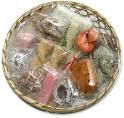
Mixed sweets from Nagatoya

During the Edo period, rich people like the local lords and merchants could afford white sugar, but the poor people had to make do with other forms of sweeteners. These cheap sweets are very nutritious and healthy and are loved by young and old. Don's they look gorgeous?
江戸時代、大名・武士・豪商の食べる白砂糖を使った上菓子に対し、庶民の食べていたのは安い黒砂糖を使った駄菓子でした。上菓子を売る店では駄菓子を置かず、庶民・子供相手の菓子屋がそれを置いていたので、駄菓子屋と呼ばれました。体に優しく、栄養価の高いおやつとして、長い間人々に親しまれ続けています。
http://www.nagatoya.net/dagashi/dagashi.html
The black eyes of this representative of Northern Sweets, our Daruma sweet, are made of local black beans, grown with effort by local farmers.

駄菓子の代表作の一つ「だるま飴」、たいへん愛きょうのある表情をしていますが、これが実は七転八起の不屈の精神をもっているのです。この目玉となる部分に使用しているのが煎り黒豆なのです。手しおに掛けたこの黒豆たちが「だるま飴」として生きているのです。
sendaimeiten.com
A bag of sweets (dagashi 駄菓子) with one Daruma-Ame

ぶどうにぎり、あんこ玉、梅干、くろぱん、ごぼう切、月の輪、若草、だるま飴、みそぱん

Click for more photos!
:::::::::::::::::::::::::::::::::::::::::::::::::::::::::::::::::::::::::::::::::::::::::::::::::::::
.. .. .. .. .. Dagashi 駄菓子
Traditional Cheap Sweets

These assorted traditional confectioneries are widely known as Sendai Dagashi.
Originally, Dagashi (meaning cheap sweets) were produced almost "spontaneously" in the everyday life of common peple.Their old unrefined shapes as well as the rural flavor still attracts the people of today.
Original Sendai traditional hand-made confections are made with inexpensive ingredients such as beans and rice crumbs. Over 100 rare and nostalgic sweets are displayed here, including "Nankinto," a sweet that a European was carrying when he drifted ashore at Shiogama, during the Genroku period, and "Kumanejiri," a sweet made of powder ground by a very strong boy named Kumadoji using a mortar of heavy stone.
http://www.kankou-miyagi.net/cgi-bin/ss_detail.cgi?ID=2280011&country=eng&ef=lst
Dagashi:
junk sweets that were, and have been, typically sold at old fashioned mom-and-pop sweet shops
Although the word itself implies something negative ("da" is "poor" or "cheap", and "gashi (kashi)" "confection"), you can't sniff at Dagashi. Actually, they are snacks of extremely low price and high quality (perhaps). They taste super. And more than anything else, they have given great childhood memories to people in Japan (maybe).
http://www.hatano-es.com/kiyo/journal/archives/000293.html
Over 100 rare and nostalgic sweets are displayed here, including "Nankinto," a sweet that a European was carrying when he drifted ashore at Shiogama, during the Genroku period, and "Kumanejiri," a sweet made of powder ground by a very strong boy named Kumadoji using a mortar of heavy stone.
http://www.kankou-miyagi.net/cgi-bin/ss_detail.cgi?ID=2280011&country=eng&ef=lst
History of Dagasihi, cheap sweets from the Northern Regions.
To withstand the long cold winter, mothers used to make them themselves too and enjoyed a sweet broth with the neighbours.
「北は寒いね」と話し、やはり戊辰戦争の、白虎隊の哀切極まる歴史の余韻を胸に満たして訪れたのが、会津駄菓子の老舗「本家 長門屋」さん。
大正末期築の、黒格子窓のどっしりした木造2階建て。引き戸を開けると、途端にさまざまな色彩や形が目に飛び込んできた。ピンク色の"だるま飴"、かわいい鳥の形の"とり飴"、青大豆のきな粉を固めてねじった"黄粉ねじり"、赤ちゃんの握りこぶしのような"握りおこし"、白い粉の下から薄紅色が見えるまあるい"梅干"……。40種近くが所狭しと並ぶ。形のおもしろさ、色の優しさ。どんな味がするのだろう? さっきまでのしんみりした気持ちが吹き飛んで、これもあれもと無心に欲しくなる。人の気持ちを引き立て、楽しい心持ちにさせてくれるのが駄菓子なのかと実感した。早速一口。原料はもち米、大豆、胡麻や黒糖などで、添加物は一切入っていないとか。飴もあんこ玉も、原料の持ち味そのものの、舌を優しく包む素朴な味わいだ。
source : dan president
:::::::::::::::::::::::::::::::::::::::::::::::::::::::::::::::::::::::::::::::::::::::::::::::::::::
While we are at the sweet department, let us take a look at
Wagashi, the Japanese Sweets, mostly used for the Tea Ceremony to create a seasonal feeling. Many come with their own Saijiki, Seasonal Records. 和菓子歳時記
Look at these links for such a Sweet Record Saijiki.
From the numbers 1 to 12 in the middle you can guess the Month they are refering to.
This is a Rice Cake representing Flower Petals 花びらもち, in the colors of Daruma.
Hanabira Mochi Photos !
http://www.kouro-an.jp/saiji.html
http://web.kyoto-inet.or.jp/people/kyotoksd/seasons/0-saijiki.htm
:::::::::::::::::::::::::::::::::::::::::::::::::::::::::::::::::::::::::::::::::::::::::::::::::::::
Click on any of the buttons on the left to see trays of delicious sweets.
師走 (平成16年12月) The 12 means December. 16 is the year Heisei 16, 2004.
http://www.kaho-fukuoka.co.jp/saijiki.html
Some Western style cakes during the seasons
http://www.zenkaren.net/yearevent/saijiki.html
A book about the Cakes of the Season
http://tankosha.topica.ne.jp/special/bookfair/2003_08/book1.html
:::::::::::::::::::::::::::::::::::::::::::::::::::::::::::::::::::::::::::::::::::::::::::::::::::::
Other Japanese Sweets with Daruma
Here a little princess Daruma takes the form of a sweet. Fukutoku, Futtoku
●「福徳」「ふっとく」とも「ふっとこ」ともいわれる正月の縁起菓子。巾着型のもち粉で出来た最中のような皮を割ると、中から土人形や姫だるまが顔を出す。何が入っているかは、割ってからのお楽しみ。今は諸江屋のみで販売。
http://www.kanazawa-kankoukyoukai.gr.jp/3mikaku/kashi_top.htm
Fukubuku Daruma、 Lucky Daruma 福々だるま

from yoshinoya
Dorayaki, Cakes with beanpaste filling
They are a speciality of the temple Jindai-Ji and are sold there too.
深大寺の縁起だるまのお菓子です。もちろん、深大寺にも売ってます!!
. Dorayaki (どら焼き - 銅鑼焼き) .
They are a speciality of the temple Jindai-Ji and are sold there too.
深大寺の縁起だるまのお菓子です。もちろん、深大寺にも売ってます!!
Read about Jindai-Ji
★ Jindai-ji - A Daruma Market and Sanskrit
深大寺の達磨市と梵字
:::::::::::::::::::::::::::::::::::::::::::::::::::::::::::::::::::::::::::::::::::::::::::::::::::::
Cough drops with the Daruma face,
from temple Kawasaki Daishi

After reading this story, a good friend just send me a packet of these sweets. Each one has a slightly different face. They are prepared in a long rod and then cut to bite-size. The cutting process is very important and done in a rythmical way that reverberates through the whole street leading toward the temple.
To cut, as a symbolic act, is supposed to cut away evil influence and thus these sweets are especially "lucky".

This is the original, how they should look. They are a favorite souvenir from a trip to the Temple.

何よりダルマの顔にするには大勢の熟練の手が必要。顎、口、ほっぺなどパーツごとに分担して作り、順番に重ねていくのですが、固さや出来あがるタイミングが異なるため、息のあったベテランでないと難しいのだとか。よそでは売っていないこの店だけのオリジナルなので、参拝のおみやげにはぴったりです。
source : 川崎大師 飴
How are these sweets made, you ask? Well, here is the process (as far as I know).
Stripes of colored candy mass are put together to form a figure, in our case big eyes, a mustache and so on. The mass is then stretched in the form of a stick (nowadays in a machine) with a diameter of a round mouthful size at a great length of more than one meter. This long stick is then cut by the "choppers", cutting once on the sweet mass and three or for times on the board to get a nice rythm, as a tourist attraction of course.

f
:::::::::::::::::::::::::::::::::::::::::::::::::::::::::::::::::::::::::::::::::::::::::::::::::::::
Two more from my collection
Daruma Cockies, ダルマサブレ―、だるまサブレー
is another speciality sold at the Kawasaki Temple.
Daruma Sable from Kawasaki
ダルマぬれせんべい: 七転び八起き人生
Daruma Senbei Rice Crackers
:::::::::::::::::::::::::::::::::::::::::::::::::::::::::::::::::::::::::::::::::::::::::::::::::::::
Check my Photo Album with Food Items of Daruma
. Photo Album FLICKR &
:::::::::::::::::::::::::::::::::::::::::::::::::::::::::::::::::::::::::::::::::::::::::::::::::::::
ameuri, ame uri 飴売り vendor of candy in Edo
There was a proverb in Edo,
naki ko ni ame 泣く子に飴 a child that cries gets sweets
.ame-uri, ameuri, ame uri 飴売り
vendor of candy, candy sellers in Edo .
and
mizuame (水飴) is a sweetener from Japan
:::::::::::::::::::::::::::::::::::::::::::::::::::::::::::::::::::::::::::::::::::::::::::::::::::::
Sweets from Japan : Wagashi, Chagashi and Haiku ... SAIJIKI
WASHOKU ... Japanese Food SAIJIKI
WASHOKU ... Sweets from the Kanto region
To the Daruma Museum Index
http://darumasan.blogspot.com/
- #ameuri #dagashi -
:::::::::::::::::::::::::::::::::::::::::::::::::::::::::::::::::::::::::::::::::::::::::::::::::::::



 Posts
Posts



7 comments:
.
Anko with Daruma, Daruma An だるまあん , 餡子だるま
.
Dagashi Stores
The word dagashi originally referred to cheap candies of low quality, but over time the word came to be used for candies children can easily afford with their small allowances. The variety of dagashi is quite amazing. The types of candies and snacks that can be bought include candy drops, chocolates, cakes, juice powders that you dissolve in water to make juice, rice crackers, flavored squid, and many, many more. They are wrapped in colorful packages, and some come with a sort of lucky draw that allows you to claim a second candy or snack if you get a win.
Until the 1960s or 1970s every Japanese town had a dagashi store, where coin-clutching children from the neighborhood would gather and hang out with their friends. The shops were filled with candies of every color, and they also sold toys - spinning tops, menko playing cards, handicraft sets, marbles, and so forth. Some shops even had games that could be played there or served a kind of savory pancake called okonomiyaki.
The candies and toys were all very cheap, costing from 5 to 10 yen. The kids would compare their budget with what they wanted and think carefully over what to buy or consult with their friends. They would become friends with the woman running the shop (it was more often a woman than a man), who would teach them lots of things.
Over the last few decades, though, traditional dagashi stores have gradually disappeared from the towns. As Japan's economy developed and children came to have more money in their pockets, they began buying more expensive snacks at supermarkets and convenience stores instead of dagashi. And because birthrates have been falling in Japan and there are fewer children, it has become difficult for stores that rely only on children to stay in business.
Nowadays dagashi are more often found in convenience stores and 100-yen shops.
Amezaiku, art of Japanese candy sculpture
http://www.amezaiku.com/eng/index2.html
TAKAHIRO MIZUKI
.
Legend from Ishikawa, Kanazawa
Once a woman died shortly before giving birth and her grave was made in the temple 道入寺 Donyu-Ji. From that day on every evening there came a woman to 飴屋 the sweet shop to buy sweets. The shop owner thought this strange and followed her. She disappeared near the Sotoba of a grave. When they dug open the next morning they found a baby licking sweets.
The priest of the temple took the baby, called it Doogen 道玄 Dogen and brought the boy up to become a merciful priest.
To always remember the good deed of his ghost mother, he went to the painter 円山応挙 Maruyama Okyo and asked him to paint a hanging scroll of her ghost.
.
with photo of the painting here
https://heianperiodjapan.blogspot.com/2019/11/sotoba-grave-marker-legends.html
.
Legend from Nagasaki city
.
ubume no yuurei 産女の幽霊 the ghost of a woman giving birth
Once in the evening someone knocked at the door of 飴屋 the sweet vendor.
When he opened, there was a young woman with a baby in her arms.
She bought some sweets and left.
She came every evening now and one night the owner followed her. They came to a well at a crossroads,
wher the woman drew some water, diluted the sweets and gave the water to her baby.
Then she went on to the graveyard of the temple 光源寺 Kogen-Ji, where she disappeared.
When they checked, they found a baby alive in her grave.
,
https://gokurakuparadies.blogspot.com/2020/09/kogenji-kannon-mukogaoka.html
.
Legend from Hiroshima, 宮島町 Miyajima town
.
At 光明寺 the temple Komyo-Ji in 芸州宮島 Geishu Miyajima they heard the sound of a baby crying at the grave of the head priest.
When the villagers dug out they found a baby. They gave the baby many sweets and it grew up.
Its hair was almost white.
.
https://gokurakuparadies.blogspot.com/2019/04/komyo-shingon-legends.html
.
Legend from Hyogo, 城崎郡 Kinosaki district 香住町 Kasumi town
ame kai 飴買い buying sweets
A beautiful young wife was pregnant, but she died of densenbyo 伝染病 a pandemic.
About one week later, a woman on a fire chariot came every night to the sweets shop to buy sweets.
The money in the box for offerings at the temple was always empty.
When they dug up the gave, they found the woman holding a healthy baby boy in her arms.
- - Similar stories are told in other parts of Japan.
.
https://heianperiodjapan.blogspot.com/2020/02/densenbyo-pandemic-legends.html
.
Post a Comment