5/16/2006

Petroglyphs

[ . BACK to DARUMA MUSEUM TOP . ]
::::::::::::::::::::::::::::::::::::::::::::::::::::::::::::::::::::::::::::::::::::::::::::::::::::: 

Petroglyphs

Petroglyphs at Albuquerque, New Mexico
Daruma in the Shadow of Basalt


I visited my sister in Albuguerque, New Mexico. There, with the small throng of relatives and inlaws (outlaws... hehehe) we viewed the petroglyphs. As is sometimes surprising I found the bushy eyebrowed image of Daruma in the shadow patterns on a basalt bolder.

Dennis Holmes "Chibi"

- Daruma Forum -

:::::::::::::::::::::::::::::::::::::::::::::::::::::::::::::::::::::::::::::::::::::::::::::::::::::


- quote
In archaeology, rock art is human-made markings placed on natural stone; it is also largely synonymous with parietal art. A global phenomenon, rock art is found in many different regions of the world, having been produced in many different contexts throughout human history, although the majority of rock art that has been ethnographically recorded has been produced as a part of ritual. Such artworks are often divided into three forms: petroglyphs which are carved into the rock surface, pictographs which are painted onto the surface, and earth figures engraved into the ground.

The oldest known rock art dates from the Upper Palaeolithic period, having been found in Europe, Australasia and Africa. Archaeologists studying these artworks believe that they likely had magico-religious significance.


Petroglyph attributed to Classic Vernal Style,
Fremont archaeological culture, eastern Utah, USA.


The archaeological sub-discipline of rock art studies first developed in the late-19th century among Francophone scholars studying the Upper Palaeolithic rock art found in the cave systems of Western Europe. Rock art also continues to be of importance to indigenous peoples in various parts of the world, who view them as both sacred items and significant components of their cultural patrimony.Such archaeological sites are also significant sources of cultural tourism, and have been utilised in popular culture for their aesthetic qualities.
© More in the WIKIPEDIA !


on stones
the rain polishes marks
of the past


The Karelian petroglyphs – the outstanding monuments which are world-renowned, which value it is comparable to such monuments, as Kizhi and "Kalevala" runes.

- Shared by Gennady Nov -
Haiku Culture Magazine, 2013


:::::::::::::::::::::::::::::::::::::::::::::::::::::::::::::::::::::::::::::::::::::::::::::::::::::::


Shizen 自然 <> Photoalbum with natural Daruma forms

..... Shizen . Natural Daruma Shapes Stalagmites, Ikura-Cave 井倉洞


::::::::::::::::::::::::::::::::::::::::::::::::::::::::::::::::::::::::::::::::::::::::::::::::::::: 

[ . BACK to DARUMA MUSEUM TOP . ]
[ . BACK to WORLDKIGO . TOP . ]

::::::::::::::::::::::::::::::::::::::::::::::::::::::::::::::::::::::::::::::::::::::::::::::::::::: 

5/12/2006

Hands of Daruma

[ . BACK to TOP . ]

:::::::::::::::::::::::::::::::::::::::::::::::::::::::::::::::::::::::::::::::::::::::::::::::::::::

The Hands of Daruma


What is Daruma holding in his hands?
Jimotsu ... 持物 ― 達磨さんがなにを持っていますか?

. Jimotsu ... 持物 - What is Daruma holding?  


What is the meaning of the mudra (hand gestures) of a Buddhist statue and the meditation position of Zen?


. . . . . Click HERE for the answer !


Why does Daruma have his hands under his robe?


. . . . . Click HERE for the answer !


:::::::::::::::::::::::::::::::::::::::::::::::::::::::::::::::::::::::::::::::::::::::::::::::::::::


- - - - - Mudra

Gobu Shinkan :
Vizualizing the Five-Parted Heart-Mind.

"Gobushinkan" was brought back to Japan in 858 by Enchin.

Reference

::::::::::::::::::::::::::::::::::::::::::::::::::::::::::::::::::::::::::::::::::::::::::::::::::::: 

[ . BACK to DARUMA MUSEUM TOP . ]
[ . BACK to WORLDKIGO . TOP . ]

::::::::::::::::::::::::::::::::::::::::::::::::::::::::::::::::::::::::::::::::::::::::::::::::::::: 

5/06/2006

Deutschland LINKS

nnnnnnnnnnnn TOP nnnnnnnnnnnnn

LINKS auf Deutsch


Bei YAHOO.DE gibt es mehr als 273.000 Hits mit DARUMA.
http://de.search.yahoo.com/


Bei GOOGLE.DE, Seiten auf Deutsch gibt es mehr als 25.400 Hits mit DARUMA.
http://www.google.de/

Stand Mai 2006.

:::::::::::::::::::::::::::::::::::::::::::::::::::::::::::::::::::::::::::::::::::::::::::::::::::::

Der Buddhismus kam erst in der Mitte des 6. Jahrhunderts nach Japan - und zwar aus China. Eine Strömung innerhalb dieser Religion ist der Zen-Buddhismus, bei dem die Meditation im Zentrum steht. Als Begründer dieser Richtung gilt der indische Mönch Bodhidharma (jap. Daruma), der vor 534 in China gestorben sein soll.


Die Legende weiß zu berichten, daß er auf den Suzan Berg in Nordchina gegangan sei, dort neun Jahre meditierend vor einer Felswand gesessen habe und dadurch zur Erleuchtung (Satori) gelangt sei. 1191 verbreitete dann der japanische Mönch Eisai diesen Zen-Buddhismus ("Zen" heißt nichts anderes als Meditieren) in Japan.

Alle Bilder:© Nao Witting . Mehr auf diesem LINK
http://www.bz.nuernberg.de/neue_medien/yuu/bilder13_1.html

:::::::::::::::::::::::::::::::::::::::::::::::::::::::::::::::::::::::::::::::::::::::::::::::::::::

Der Daruma (jap. 達磨, eigentlich Bodhidharma) ist einer der beliebtesten Glücksbringer in Japan. Er besteht aus Pappmaché und wird mit einem Gewicht beschwert, damit er nicht umfallen kann. Somit macht er Mut, sich in jeder Situation wieder aufzurichten. Oft wird er in buddhistischen Tempeln verkauft. Die Figur stellt einen buddhistischen Mönch und einen großen Lehrer des Zen-Buddhismus (Bodhidharma) dar. Auf den Darumafiguren stehen die japanischen Schriftzeichen Glück oder Erfolg.

Die Darstellung der Figur ohne Arme und Beine geht darauf zurück, dass der Mönch Daruma angeblich 9 Jahre im Meditationssitz vor einer Felswand saß, um die Erleuchtung zu erlangen. Da man im Meditationssitz keine Arme und Beine braucht, fehlen sie auch bei dem Glücksbringer. Der Mönch soll außerdem Yoga und andere Kampfsportarten beherrscht haben und der Begründer des Kung Fu sein.

Daruma gilt als Helfer bei der Erfüllung von Wünschen. Zunächst wird ein Auge ausgemalt. Männer malen das linke Auge aus, Frauen das rechte. Der Glücksbringer sollte an einem Ort stehen, an dem man jeden Tag vorbeikommt. Ist der Wunsch in Erfüllung gegangen, wird das andere Auge ausgemalt. Dann kann die Figur in einem Tempel verbrannt werden.

Im 18. Jahrhundert wird die Figur mit dem Steh-auf-Männchen vereint.
Wikipedia ®
Wikipedia : Daruma

:::::::::::::::::::::::::::::::::::::::::::::::::::::::::::::::::::::::::::::::::::::::::::::::::::::

Ein online Lexikon, enzyklopda.de ,
Diese Seiten bietet Ihnen fast alles rund um die Begriffe „ Daruma“.
Sie finden hier, zu Daruma, die Beschreibung, Weblinks und Links zu Foren.
„Wissen ist Macht.“
Forenlinks zum Thema „Daruma“
Weblinks zum Thema „Daruma“
Sonstiges rund um „Daruma“
Daruma

:::::::::::::::::::::::::::::::::::::::::::::::::::::::::::::::::::::::::::::::::::::::::::::::::::::

**********************
Please send your contributions to Gabi Greve
Daruma Discussion Forum

Alphabetical Index of the Daruma Museum

:::::::::::::::::::::::::::::::::::::::::::::::::::::::::::::::::::::::::::::::::::::::::::::::::::::
worldkigo

5/05/2006

Puns (dajare)

[ . BACK to DARUMA MUSEUM TOP . ]
for temple Denbo-In, see below
:::::::::::::::::::::::::::::::::::::::::::::::::::::::::::::::::::::::::::::::::::::::::::::::::::::

Puns, dajare 駄洒落 ダジャレ, だじゃれ
paronomasia


Puns, share-kotoba しゃれ言葉, were very popular in Old Edo.
Dajare is also called "local dialect" jiguchi 地口.

In Old Edo, many people from all parts of Japan lived side by side.
Puns and playw with words were often used when people met for the first time to break the ice, so to speak, and make them feel comfortable. A person who could not tell a good pun was thought of rater dull (yabo やぼ 野暮), a country bumpkin.

yabo is itself a deformation of the word  「野夫」 a worker from the countryside.

hara ga herima daikon 腹が減りま大根
(練馬大根とかかっている)

ari ga too nara imo mushi hatachi
ありが十(とお)なら いもむし二十(はたち)
蟻が十なら、芋虫ゃ二十 > ありがとうなら、いもむしはたち

kon te wa kuwana no yaki-hamaguri
その手は桑名の焼きはまぐり >
「その手は桑名い」 > 「その手は食わない」

osore iriya no kishibojin
「恐れ入谷の鬼子母神」 > 「恐れ入りました」 > 「恐れいりやした」
Kishibojin is the deity of a famous temple in Iriya.
http://www.atomlt.com/07people/people01_01.html

atari maeda no kurakka
「当たり前田のクラッカー」

umakatta
「馬勝った~牛負けた」 >
「ごちそーさま。うまかった~」

sore wa zannen binshiken
「それは残念、閔子騫(びんしけん)」
顔淵・閔子騫(がんえん・びんしけん)
Ganen was a famous student of Confucius and well known at the temple schools of Edo.
Ganen > zannen

Here is a LINK with a lot more in Japanese
語呂合わせ goro awase
http://homepage3.nifty.com/downtown-boy/jisyo/jisyo1.html

:::::::::::::::::::::::::::::::::::::::::::::::::::::::::::::::::::::::::::::::::::::::::::::::::::::

jiguchi andon 地口行灯 lanterns with puns and paintings

People painted a pun with image and words on a lantern for the annual festival of Chingo-Do 鎮護堂 in Asakusa, usually called おたぬきさん Otanuki-San at the temple 伝法院 Denbo-In


Denboin doori 伝法院通り Denboin-dori, Road along Denbo-In
Denpo-In
famous for this custom to our day ! About 200 meters with the atmosphere of "Old Edo".
Denbo-In also has a famous garden.
- reference : denbouin-dori.com/midokoro-

- quote -
Denbo-in Teien Garden 伝法院庭園
Walking on Nakamise Street to Hozo-mon Gate and crossing Denbo-in-dori Street, you can find a solemn front gate at the secluded place from the left. Going through the front gate, you arrive at Denbo-in Temple which is the office of Senso-ji Temple and also the residence for head priest for generations. The garden covering the greater part of Denbo-in Temple is separated from the bustle of tourists, and a calm air is blowing among the garden. Here is one of the few temple gardens from the Edo period in Tokyo.
This garden is estimated to be originally landscaped in the Middle Ages. Old drawings and the style of landscape show that the present allocation of space arranging ponds on the north and west side of buildings is unchanged from the early Edo period.
Looking at the west pond from Ojoin (large drawing room) facing the garden, you see a large artificial hill on the left, the stone arrangement which represents a three-step dry fall from the top of the hill and the sandy beach which represents the water surface. Turning your eyes to the center, an undulating shore in islands spreads out. 
Strolling around the pond and standing on the island on the opposite side of Ojoin, you can see a full view of the fivestoried pagoda through the sandy beach arranging stepping-stones and Ojoin. Viewing the north shore which is gently undulating in contrast to the west, it is better to see standing on the stone bridge across a stream joining each pond. 
Denbo-in Teien was a secret garden as even the daimyo were not easily allowed to visit, because Denbo-in Temple was used as Gozen-sho (the place Tokugawa shoguns took a meal or rest) when they came. However, when the precinct of Senso-ji Temple was designated as a public park in 1873, this garden had been open to the public by Tokyo from 1930 to the outbreak of the Pacific War. At present, here is open to the public for a certaion period by Senso-ji Temple. This garden hands down the atmosphere of the Edo period to now, which was mostly lost from Asakusa in the Great Kanto Earthquakes and the Pacific War.
- source : syougai.metro.tokyo.... -

.......................................................................


source : kakinokidai.web.fc2.com/JiguchiAndon


:::::::::::::::::::::::::::::::::::::::::::::::::::::::::::::::::::::::::::::::::::::::::::::::::::::

目出だるま me ga deru
to have good luck


The eyes of a dice, wishing for a SIX to win in gambling.
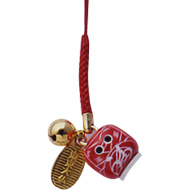


乗蓮寺 Temple Jooren-Ji
目が出る、が転じて 芽が出る、にかけているだるま。駄洒落!? と思ってしまう授与品が多いのも、神社めぐりの楽しみのひとつ。

More items for good luck on this LINK
http://www.appleway.co.jp/apple/200501/feature/06.html

:::::::::::::::::::::::::::::::::::::::::::::::::::::::::::::::::::::::::::::::::::::::::::::::::::::


dajare e-uta 駄洒落絵歌 Pun with Song and Picture

Da da Daruma no ningyoo wa
shaberitakute mo shaberenai

黙々だるま の 人形は
しゃべりたくとも しゃべれない
ぎょろり目玉で 世の中を
怒った顔して にらんでる

Copyright (C) 2004 Sora Eizo

Look at the Daruma on this LINK to see him develop as you read the full poem.
http://www.geocities.jp/sora_eizo/dajareuta/029_mokumoku/index.html

ANIME only
http://pro.tok2.com/~miyuki-h/expression/j/gallery/free/free9/sora-9.GIF

:::::::::::::::::::::::::::::::::::::::::::::::::::::::::::::::::::::::::::::::::::::::::::::::::::::


昨夜、博多市内の居酒屋で酒に酔った女性が暴れだし、店内のだるまを壊すなどしたため駆けつけた警察官に取り押さえられました。調べによると、この女性はpinpin(24)で「駄洒落が思いつかず、だるまに笑われているような気がした。むしゃくしゃしてやった」などと供述している模様です・・・

だ、だるま!だるまさんと口論だ!のニュースだな。
http://ke-shi.blogzine.jp/polan/2004/10/post_19.html

:::::::::::::::::::::::::::::::::::::::::::::::::::::::::::::::::::::::::::::::::::::::::::::::::::::


Here is a bit more on the ants ARI GA 蟻が play with words.
This is all a word joke on ARIGATOO, thank you.

3月9日は「サンキューの日」 Sankyuu の日 > Thank You !

「蟻が十匹猿五匹」 > (ありがとうござる)
「蟻が鯛なら芋虫ゃ鯨、百足汽車なら蝿が鳥」(信州) > (ありがたい)
「蟻が十なら芋虫ゃ二十」(信濃童詞)
「蟻が十なら蚯蚓が二十、蛇が二十五で嫁に行く」(東京)
http://kotobakai.seesaa.net/article/8180103.html


.............................A Set of Contrasts

puns with the words katta and maketa
one is winning, one is loosing

kowakatta - oya maketa
恐かった~ : 子は勝った 親負けた

kayukatta - meshi maketa
痒かった  : 粥勝った  飯負けた

takakatta - tonbi maketa
高かった  : 鷹勝った  とんび負けた

amakatta - boozu maketa
甘かった  : 尼勝った  坊主負けた

fukakatta - same maketa (fuka and same are names for the shark)
深かった  : 鱶勝った  鮫負けた

http://www.mmjp.or.jp/m_satoh/_Essay_1.html


:::::::::::::::::::::::::::::::::::::::::::::::::::::::::::::::::::::::::::::::::::::::::::::::::::::

kono ikura wa ikura このイクラはいくら How much costs this salmon roe?

konya kuu no wa konnyaku 今夜食うのは蒟蒻
tonight I am going to eat Konnyaku (devil's tongue jelly)

shio ga nai no wa shoo ga nai 塩がないのはしょうがない
It can’t be helped if there is no salt available.

sukii ga suki スキーが好き I like skiing


:::::::::::::::::::::::::::::::::::::::::::::::::::::::::::::::::::::::::::::::::::::::::::::::::::::

In our modern times, there is even English involved in the

oyaji gyagu おやじギャグ gags of elderly men

imakita sangyoo 今北産業 "now North Industry" -
ima kita 今来た I just joined, just came
san gyoo 三行 three lines, entering into an online conversation


Modern Pun-Ordering at the Sushi bar:

gareeji ガレージ garage - shako 車庫 - shako 蝦蛄 Shako shrimp

reinkooto レインコート raincoat - kappa 合羽 - kappamaki かっぱ巻き

:::::::::::::::::::::::::::::::::::::::::::::::::::::::::::::::::::::::::::::::::::::::::::::::::::::


Tokyo is situated in the Musashi plain 武蔵平野
MU SA SHI 。。。六三四 - 6 3 4
So when the tower had to be just a bit higher than the tower in China, they decided to make it

634 meters high.

. Tokyo Sky Tree 東京スカイツリー Skytree .

:::::::::::::::::::::::::::::::::::::::::::::::::::::::::::::::::::::::::::::::::::::::::::::::::::::


Puzzle pictures, Rebus of Old Edo, hanji-e 判じ絵


::::::::::::::::::::::::::::::::::::::::::::::::::::::::::::::::::::::::::::::::::::::::::::::::::::: 

[ . BACK to WORLDKIGO . TOP . ]
[ . BACK to DARUMA MUSEUM TOP . ]

:::::::::::::::::::::::::::::::::::::::::::::::::::::::::::::::::::::::::::::::::::::::::::::::::::::
5/04/2006

Rebus Pictures

[ . BACK to DARUMA MUSEUM TOP . ]
::::::::::::::::::::::::::::::::::::::::::::::::::::::::::::::::::::::::::::::::::::::::::::::::::::: 

Picture Puzzles, Rebus Pictuers

hanji-e  江戸の判じ絵

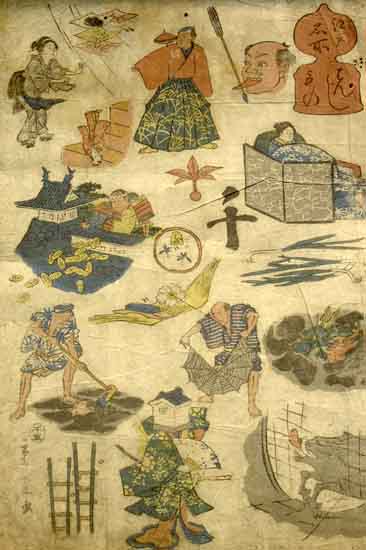
Hanji-E, Rebus and Puzzle Pictures where a speciality of the SHARE 洒落, the witticism of Old Edo.

The paintings, when the words were spoken aloud, would make a new word or sentence.
You need to know your Japanese very well to read them. You use only the sound of each illustrated item to create a new one.

判じ絵の考案(掛け言葉、だじゃれ)で、読み手は書かれたアイコンの音だけで処理します.

:::::::::::::::::::::::::::::::::::::::::::::::::::::::::::::::::::::::::::::::::::::::::::::::::::::

This is quite a famous one.


suzu ni me ... suzume 雀

:::::::::::::::::::::::::::::::::::::::::::::::::::::::::::::::::::::::::::::::::::::::::::::::::::::
From The War

こんなものが慰問袋から出てきたら……脱力・脱糞・戦意喪失であろう


(答・わたしたちもはたらきます
watakushi tachi mo hatarakimasu
http://www.tadanorih.hp.infoseek.co.jp/tondemo/tondemo11.htm

:::::::::::::::::::::::::::::::::::::::::::::::::::::::::::::::::::::::::::::::::::::::::::::::::::::
About Tobacco, from Hiroshige
kore o hanjite gorōjiro


http://www.hokusai-paintings.com/index_kako/index200312.html

:::::::::::::::::::::::::::::::::::::::::::::::::::::::::::::::::::::::::::::::::::::::::::::::::::::

江戸名所 はんじもの(重宣)  
Famous Places in Edo


重宣 (1826-1869)は広重の弟子であり、
その後二代広重を襲名した人です。これは江戸の庶民の機知やユ-モアに呼応するもので、こんなところからも当時の一般庶民の生活ぶりが偲ばれます。寛政の改革で、美人画のなかに名前を書くのを禁じられたため「コマ絵」として、判じられもしました。もともと浮世絵は庶民のものでしたが、子供のおもちゃ絵からこういう謎解きもの、さらには今の新聞に代わるものまで発行されました。ただ庶民的であることが、その芸術性(代わる言葉が無くての表現ですが)を妨げるものでないと、私は思っています。浮世絵の中にある一要素をもって、全体の評価とするのは間違いだと思うからです。

さて、上記の作品は判じ物の中でもよく目にするものです。画面では少し皺がよってますが状態は良く直ぐ修復できそうで、値段だけでなく本当にラッキ-な出会いでした。江戸の地名を絵で描いてあるのですが、お判りでしょうか?
真ん中上部に描かれた、肩に独楽が乗っているのは「駒形 Komagata 」です。その右、舌に矢が刺さっている絵は「下谷 (shita ya ) 」ですね。他図も是非江戸の人に挑戦してください。どうしても判らない方は、「たばこと塩の博物館」を覗いて見てください、答えが紹介されております。

http://www.page.sannet.ne.jp/rokano28/ukiyoe/hanji.htm

Big Illustration
http://www.jti.co.jp/Culture/museum/tokubetu/eventApr99/hanji_1.html

:::::::::::::::::::::::::::::::::::::::::::::::::::::::::::::::::::::::::::::::::::::::::::::::::::::

閻魔大王判じ絵
Ema, the King of Hell


http://www.iii.u-tokyo.ac.jp/pblc-achv/digital_archive/ono_collection/contents/item.49.N029.html

:::::::::::::::::::::::::::::::::::::::::::::::::::::::::::::::::::::::::::::::::::::::::::::::::::::

判じ絵 十二ヶ月
The 12 Months of the Year

睦月(一月)から師走(十二月)までを判じ絵で染めております。どの絵がどの月か解いてみてください。


http://www.rienzome.co.jp/syumi/new/438.htm

:::::::::::::::::::::::::::::::::::::::::::::::::::::::::::::::::::::::::::::::::::::::::::::::::::::

【ダジャレ遺産:判じ絵】 Dajare of Edo

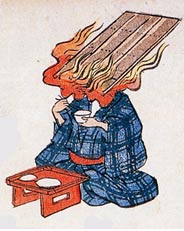
これは、人名である。


燃える戸がご飯を食べている、

つまり、「戸燃え御膳」 >> 巴御前である。
Tomoe Gozen


. Tomoe Gozen (巴御前) .
(1157?–1247) famous concubine of Minamoto no Yoshinaka.

... ...

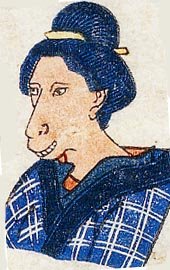
食べ物だそうである。


怪奇!馬女!! >> ではない。

馬に似ている。>>「馬似」>> ということで、うま煮
Uma-ni

... ...

生き物である。


はずかしがりやさん。>> ではない。

このシャイボーイは戸の陰にいる。>>「戸陰」>> 

ということで、トカゲ - Tokage

... ...

屁シリーズ、HE - farting


屁に火がついている。また、火の横にある横並びの点は、濁点を表している。

屁火+濁点 > なので、ヘビ ... Hebi, snake 蛇
to extinguish a fire HI/BI with a fart HE.

. WKD : Fart, farting (he 屁) .

... ...

屁シリーズ、その2 - farting


パーマヘアーをバンダナでまとめている、そんな八十年代アイドルみたいな奴が屁をしているわけではない。

こいつは、菜っ葉である。菜っ葉が屁。> 菜屁 ... Yasai

... ...

屁シリーズ、その3 - farting

今度は、どうも「屁」という音は関係ない。臭さをフューチャーしたらしい。表しているのは、今でも有名な地名。


「あ」仮面と臭いフェチ。

ではもちろんない。これは、他のに比べて分かりやすかったかもしれない。

「あ」が出した「さ」が臭い。 >> あさ臭 >> 
だから、浅草 Asakusa

一孟斎芳虎:画「新板はんじ物、虫」より
http://ameblo.jp/naiema/archive-200505.html

:::::::::::::::::::::::::::::::::::::::::::::::::::::::::::::::::::::::::::::::::::::::::::::::::::::
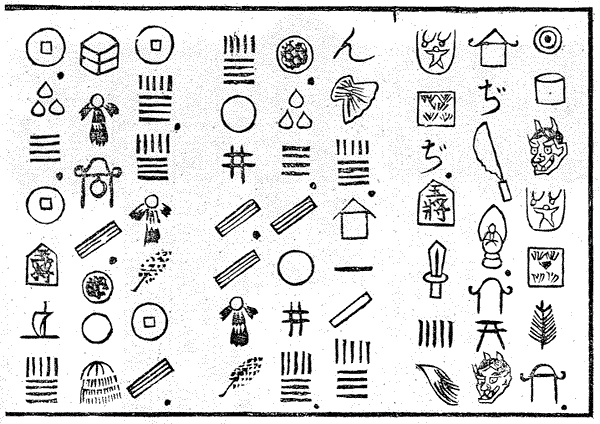
判じ物と判じ絵


http://www.torito.jp/puzzles/puz_img/211_3b.gif

:::::::::::::::::::::::::::::::::::::::::::::::::::::::::::::::::::::::::::::::::::::::::::::::::::::

There is a book about these kind of picture puzzles.

Edo no Hanji-E 江戸の判じ絵
by 岩崎均史著

This is a kind of humor that will be hart to understand by non-Japanese.

体系化された初めての本ではないだろうか。版も大きいし、絵そのものも楽しめる。歌麿をはじめとして国貞、国芳など錚錚たる作家のはんじものもあれば、浮世絵作家が名を成す前に子供向けに作成したものなど多彩であり、手の込んだ刷り物が数多く収録されている。基本はことば遊びなので絵を見れば分かると言うわけにも行かず、やっぱりこのユーモアは外人には理解できないだろう。
http://www.book-navi.com/book/syoseki/edo.html

:::::::::::::::::::::::::::::::::::::::::::::::::::::::::::::::::::::::::::::::::::::::::::::::::::::

- quote -
Deciphering the place names, reading from the right to left:
1. め me (eye)・くろ kuro (black) → 目黒 Meguro
2. 四 yotsu (four)・矢 ya (arrow) → 四谷 Yotsuya
3. 鵜 u (cormorant, resting on top of a marker for advertising selling "colors")・絵の eno (two characters of the advertising stand) → 上野 Ueno
4. あ aka (red on top of umbrella)・傘 kasa (umbrella)・か ka (a character reading) → 赤坂 Akasaka
5. あ a (a character)・さ sa (a character)・臭(い) kusa(i) (smelly) → 浅草 Asakusa
6. 巣 su (spider nest)・(阿)弥陀 (a)mida (the Biddha)・川 kawa (river) → 隅田川 Sumidagawa river
7. 四 shi (four)・ば(葉に濁点) ba (leaf with dactiles on each leaf) → 芝 Shiba
8. 本 hon (book)・碁 go ("go" game with black and white chips)・鵜 u (cormorant, resting on top of a figure) → 本郷 Hongō/Hongou
9. かな kana (character)・すぎ sugi (ceder) → 金杉 Kanasugi
10. 煎り iri (roasting)・矢 ya (arrow) → 入谷 Iriya
11. 鷹 taka (howk)・縄 nawa (rope) → 高輪 Takanawa
12. つ(る) tsu(ru) (crane, shown only with its beak)・雉 kiji (pheasant) → 築地 Tsukiji
13. 火 hi (fire)・くら(わす) kurawasu (force feed) → 日暮里 Nippori, here read as (ひくらしの里 Hikurashi no sato, a sun-set village)
14. 大(きい) ō(kii) (large)・(こと)じ/琴柱 (koto)ji (bridge for koto string instrument) → 王子 Ōji
15. 本 hon (book, on the seated figure)・錠 jo (lock) → 本所 Honjo
16. 番 ban (to guard)・帳(面) chō(men) (account book)→ 番町 Banchō
17. 梅 ume (plum)・輪 wa (circle)・蚊 ka (mosquito) → 梅若 Umewaka (墨田区の旧町名, an old name in the Sumida Ward)
- source : National Diet Library -

Edo meisho hanjimono 江戸名所 はんじもの


:::::::::::::::::::::::::::::::::::::::::::::::::::::::::::::::::::::::::::::::::::::::::::::::::::::


Continue to

Puns and Word Plays, dajare 駄洒落 of Old Edo


::::::::::::::::::::::::::::::::::::::::::::::::::::::::::::::::::::::::::::::::::::::::::::::::::::: 
[ . BACK to WORLDKIGO . TOP . ]
[ . BACK to DARUMA MUSEUM TOP . ]

:::::::::::::::::::::::::::::::::::::::::::::::::::::::::::::::::::::::::::::::::::::::::::::::::::::