:::::::::::::::::::::::::::::::::::::::::::::::::::::::::::::::::::::::::::::::::::::::::::::::::::::
Lanterns with Daruma, Daruma Choochin
だるま提灯
choochin 提灯 / 提燈 / チョウチン Chochin, Lantern, Lanterne

This one is from Hakone.
This type of lantern with Daruma is a common souvenir found in many tourist areas. I have some from Kamakura, Miyajima and other famous places.
. bake-choochin 化け提灯 Bake-Chochin, Monster Lantern .
Chōchin-obake 提灯お化け, "paper lantern ghost"
:::::::::::::::::::::::::::::::::::::::::::::::::::::::::::::::::::::::::::::::::::::::::::::::::::::
On this page, you can click on the arrow and see the whole process of making a paper lantern. It takes a while to upload.
だるま提灯の作成行程
提灯が仕上がるまでの作業工程を説明しています。
骨組みの作成から紙貼りまでを紹介しています。
http://www14.plala.or.jp/chouchin/koutei/koutei.htm
The bamboo grid is made either of one long bamboo spiral, which breakes quite easily but is cheap to make.
Or circles of different size are adjusted around a woode frame and then sewn together with a string. They are covered with paper and the wooden frame form taken out. Then each fold is carefully made with the fingers.
This type is more expensive and called Lantern from Kyoto (kyoo choochin 京提灯)
. . . CLICK here for kyoto lantern Photos !
:::::::::::::::::::::::::::::::::::::::::::::::::::::::::::::::::::::::::::::::::::::::::::::::::::::
From a collector of lanterns, here is one from Tsumagome/Magome, Nagano.
妻籠・馬籠(長野) だるま型提灯
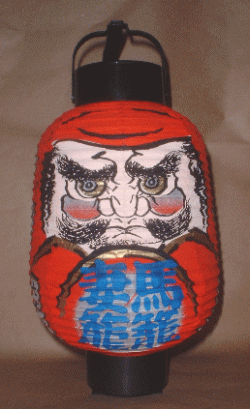
http://www.lcv.ne.jp/~surgek/tyoutinmagome.htm
:::::::::::::::::::::::::::::::::::::::::::::::::::::::::::::::::::::::::::::::::::::::::::::::::::::
Two modern lanterns, with electrical fixtures for indoors.


『招福だるま提灯』, 有限会社 三好商店
Good Luck Daruma From Miyoshi Store, Takamatsu, Shikoku
http://www.netwave.or.jp/~cyouchin/interior.htm
His homepage about lanterns in English
http://www.netwave.or.jp/~cyouchin/paperlantern2.htm
:::::::::::::::::::::::::::::::::::::::::::::::::::::::::::::::::::::::::::::::::::::::::::::::::::::
During the Winter Festival in Nakashibetsu, Hokkaido, lanterns of Snowman Daruma were used.
なかしべつ冬まつり

http://www.nakamap.or.jp/tiikikanko/kanko/fuyumaturi/27th.htm
:::::::::::::::::::::::::::::::::::::::::::::::::::::::::::::::::::::::::::::::::::::::::::::::::::::
During the winter festival of Takasaki town, the town of origin of the modern Daruma dolls, there are also Daruma lanterns made every year by the children.
町の通りの街灯にも子供たちが作っただるま提灯が飾られ、祭囃子の練習も始まっています。

http://www.pref.gunma.jp/g/02/nigiwai/genki-news-15.htm
:::::::::::::::::::::::::::::::::::::::::::::::::::::::::::::::::::::::::::::::::::::::::::::::::::::
Here is a Japanese Daruma Lantern in the city of Seoul, Korea.
http://www.pusannavi.com/daynews/daily_photo.html?id=234
I also found some simple lanterns, made in China, for many modern events in Japan.
In the story about the Blowfish (fugu, Japan) you find a lantern made out of a dead fish!
:::::::::::::::::::::::::::::::::::::::::::::::::::::::::::::::::::::::::::::::::::::::::::::::::::::
Quote from
Japanese Interiors, Paper Lanterns -- chochin
A "chochin" is a hand crafted paper lantern made of bamboo and Japanese washi paper. Well, at least it used to be. Now, of course, you can find factory-made plastic ones that look exactly like the real thing. Chochin cast a serene glow, simple and elegant.
Chochin lanterns are very common throughout Japan. Restaurants hang them near their entrance, indicating that they are open for business. They are generally less formal, and more utilitarian, than other traditional decorations like hanging scrolls.
To a western eye, they are perhaps one of the most widely recognizable Japanese decorations, next to, perhaps, woodblock prints or folding screens.
Chochin containing a candle were widely used during the Edo period (1603-1869) as a portable light source. During the Edo period the night-time was darker than it is today and people had to travel on foot. Odawara Chochin was both useful and psychologically reassuring because of the belief that it protected people against evil spirits. For these reasons, it was widely used, particularly by travelers from the beginning of the 18th century.
The Odawara chochin is perhaps the most well-known. Named after a person who was living in Odawara, now a city in Kanagawa, the prefecture just south of Tokyo, the Odawara chochin have three distinguishing features.
They are collapsible, small and light enough to fit in the bosom of a kimono.
They are durable and can be used in inclement weather.
It is believed that they are able to protect people against evil spirits, especially when constructed of materials gathered from sacred locations.
http://www.japanese-interiors.com/japanese-lanterns.htm

:::::::::::::::::::::::::::::::::::::::::::::::::::::::::::::::::::::::::::::::::::::::::::::::::::::
"Chochin" was a kind of lantern at Japan in the olden times. At those days, "Chochin" served as a flash light when people went out at night. Japanese Lantern-"Chochin" made of a bamboo frame with paper covering. A candle burns inside. Today, "Chochin" is mainly used in festival at various Japanese towns. The design, pinted picture of Geisha makes it suitable for home decor.
http://www.existenz.co.jp/fu2.htm
About Lanterns from Odawara, Odawara Chochin
Chochin (Japanese lantern) widely used during the Edo period (1603-1869) is portable light that use candle as a light source. Japanese paper is applied to a spiral-shaped coil of finely split bamboo, and rings are fitted to the top and bottom of the Chochin so it can be collapsed and folded flat.
http://web-japan.org/atlas/crafts/cra10.html

Odawara Lantern
In the pun-language of the Yoshiwara pleasure quarters, this was also an expression for an old man's penis.
Odawara choochin 小田原提灯
. Regional Folk Craft from Japan .
:::::::::::::::::::::::::::::::::::::::::::::::::::::::::::::::::::::::::::::::::::::::::::::::::::::
Big Lantern Festival . Oochoochin Matsuri
at Suwa Shrine and other places
大提灯(おおちょうちん)諏訪神社
. . . CLICK here for Photos !
. Gifu 岐阜提灯 Gifu Chochin, Lanterns from Gifu .
With delicate hand-painted patterns. Almost like Bon Choochin.
:::::::::::::::::::::::::::::::::::::::::::::::::::::::::::::::::::::::::::::::::::::::::::::::::::::
Sanuki Choochin, Sanuki Chochin, Lanterns from Sanuki
讃岐提灯
With three layers, innermost with dragon, middle with sutras, outside with pattern

:::::::::::::::::::::::::::::::::::::::::::::::::::::::::::::::::::::::::::::::::::::::::::::::::::::::

source : blog.livedoor.jp/suntronix_fuga
kokeshi choochin こけし灯籠 lanterns in the form of wooden dolls
. kokeshi こけし wooden dolls, Kokeshi .
:::::::::::::::::::::::::::::::::::::::::::::::::::::::::::::::::::::::::::::::::::::::::::::::::::::
Lanterns for O-Bon, bonjoochin 盆提灯
(bon choochin) ぼんぢょうちん
There are two types, to hang and to stand. Usually they are made to turn around and around, producing nice shadows on the paper screens of the walls and windows of a typical Japanese home.
They serve the same purpose as the fires at the entrance, to welcome and later to send off the souls of the ancestors.
Standing Lanterns
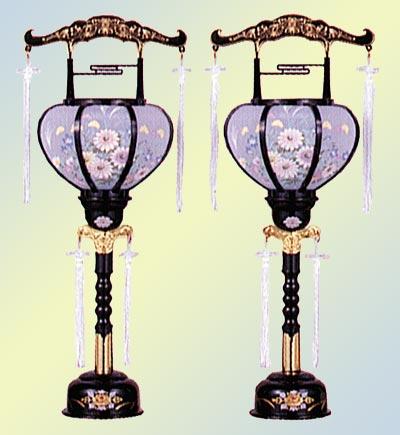
http://www.butsudanya.co.jp/shop_chochin2.html
Hanging Lanterns

http://www.butsudanya.co.jp/goods_chochin1.html
Link in Japanese
盆提灯はなぜ飾るのですか? nadonado
http://www.butsudanya.co.jp/bon_chochin5.html
Preparing bamboo lanterns for o-bon
This time they use halfcut bamboo pieces with candles to produce a natural light.
Look at the photos here:
http://pictures.nicolas.delerue.org/japan/200408_Nara_Obon/Nara_Obon_5352.html
Read more about O-Bon as a kigo for early autumn for a haiku.
Bon Festival (o-bon) お盆
盆提灯たためば熱き息をせり
bonjoochin tatameba atsuki iki o seri
this bon lantern -
when it is closed it lets out
a hot breath
Nonaka Ryosuke (Ryoosuke) 野中亮介 (1958 - )
:::::::::::::::::::::::::::::::::::::::::::::::::::::::::::::::::::::::::::::::::::::::::::::::::::::

鳥羽(三重)from Toba, Mie prefecture
Look at many many many more :
source : kunio.raindrop.jp
:::::::::::::::::::::::::::::::::::::::::::::::::::::::::::::::::::::::::::::::::::::::::::::::::::::
. List of Edo craftsmen 江戸の職人 .

. Edo Tegaki Chochin 江戸手描提灯
Hand-Painted Paper Lanterns .
火袋提灯 hibukuro chochin (literally "fire bag lanterns")
高張提灯 takahari chochin parade lanterns with long poles
From the mid Edo Period onward, a great number of craftsmen skilled in calligraphy and brushwork resided in Edo's Asakusa district. Wholesaling systems were developed in the Meiji Era (1868-1912), this resulted in a growing division of tasks between chochin production processes and character/crest decoration processes. Even today, some Tokyo craftsmen make a living based on writing Japanese characters on finished hibukuro 火袋 ("fire bag lanterns"). The Japanese characters written on chochin are generally referred to as being in the Edo moji style (the Edo lettering style), and such chochin calligraphers also prepare senjafuda, slips of paper bearing pilgrim names that are affixed to the gates of Shinto shrines and Buddhist temples.
Although lettering is written inside an outlined area on senjafuda 千社札, chochin lack such restrictions. This leads to a slightly more free-flowing calligraphy style. Furthermore, painting family crests on chochin differs from applying them to kimono, in that the former are painted in black ink on a white background. Crests are painted in a way that facilitates visibility from a distance, and unique methods are utilized to achieve a balanced appearance.
choochinshi 提灯師 craftsman making paper lanterns

Since the dark roads of Edo at night were not always safe, the stick to hold a lantern was quite strong and could serve as a weapon in case of need.
.......................................................................
choochin hari 提灯張り gluing paper to lanterns
choochin harikae 提灯張り変え gluing new paper to lanterns

Since the paper of the folding lanters broke easily, repairing them was a good job in the towns of Edo, Osaka and Kyoto. On demand the repairmen would also paint the family crest or the name of a shop on a newly repaired lantern.
. naishoku 内職 home worker, side business in Edo .
.......................................................................
- reference : 浮世絵 提灯 Ukiyo-E -


川瀬巴水 提灯 雪の柳橋 Yuki no Yanagibashi
:::::::::::::::::::::::::::::::::::::::::::::::::::::::::::::::::::::::::::::::::::::::::::::::::::::

- ANDON 行灯 Andon lanterns of old -
. Yotaka andon matsuri 夜高行灯祭 (よたかあんどんまつり)
Yotaka andon lantern festival .
Fukuno no yotaka 福野の夜高(ふくののよたか)
observance kigo for late spring
. bonbori ぼんぼり / 雪洞 paper lantern .
- Introduction -
:::::::::::::::::::::::::::::::::::::::::::::::::::::::::::::::::::::::::::::::::::::::::::::::::::::
Akachochin Jellyfish 赤提灯クラゲ Pandea rubra
. Daruma Lantern at a Shop in Saga, Kyoto
:::::::::::::::::::::::::::::::::::::::::::::::::::::::::::::::::::::::::::::::::::::::::::::::::::::

"Paper Lantern Seller"
Tokuriki Tomikichiro 徳力富吉郎
:::::::::::::::::::::::::::::::::::::::::::::::::::::::::::::::::::::::::::::::::::::::::::::::::::::
. 河童 / かっぱ / カッパ - Kappa, the Water Goblin of Japan! .
- Introduction -

source : google.co.jp
:::::::::::::::::::::::::::::::::::::::::::::::::::::::::::::::::::::::::::::::::::::::::::::::::::::
. bake-choochin 化け提灯 Bake-Chochin, Monster Lantern .
Chōchin-obake 提灯お化け, "paper lantern ghost"
[ . BACK to WORLDKIGO . TOP . ]
[ . BACK to DARUMA MUSEUM TOP . ]
- #chochin #paperlantern -
:::::::::::::::::::::::::::::::::::::::::::::::::::::::::::::::::::::::::::::::::::::::::::::::::::::



 Posts
Posts



12 comments:
.
moon in the autumn dawn--
nearing month's end
lantern in the eaves
ariake ya misoka ni chikaki noki andon
有明や晦日に近き軒行灯
Haiku by Issa, 1827
In this context the word "dawn" (ariake) is an autumn season word (ki-go) because, as Shinji Ogawa oints out, it is short for ariakezuki: a full moon at dawn, the full moon suggesting autumn in the seasonal system of haiku.
It is one day closer to winter. Issa, in his last year of life, is perhaps reflecting on his own mortality.
Tr. David Lanoue
http://cat.xula.edu/issa/
::::::::::::::::::::::::::::::::::::::::::::::::::::::::::::::::::::::
.
a quick song
inside the lantern...
katydid
andon ni choito naki keri kirigirisu
行灯にちょいと鳴けりきりぎりす
Haiku by Issa, 1818
Tr. David Lanoue
to one side
of my paper lantern...
spring's first dawn
andon no katappira yori kesa no haru
by Issa, Tr. David Lanoue
...................................
What a exquisite image. I can just see that peachy pink glow, blushing
the paper.
How I wish we used paper lanterns here. How lovely!
http://groups.yahoo.com/group/simply_haiku/message/20431
More kigo with the BON Lanterns
bon dooroo 盆燈籠(ぼんどうろう)
bon choochin 盆提燈(ぼんぢょうちん)
takadooroo 高燈籠(たかどうろう)
agedooro 揚燈籠(あげどうろう)
kiriko dooroo 切子燈籠(きりこどうろう)
kiriko 切子(きりこ)
orikake dooroo 折掛燈籠(おりかけどうろう)
orikake 折掛(おりかけ)
nahadooroo 花燈籠(はなどうろう)
edooro, e-dooroo 絵燈籠(えどうろう)
nokidooroo 軒燈籠(のきどうろう)
funadooroo 舟燈籠(ふなどうろう)
hakadooroo 墓燈籠(はかどうろう)
dooroo kenbutsu 燈籠見物(とうろうけんぶつ)
doorooten 燈籠店(とうろうてん)
.
行燈の煤けぞ寒き雪のくれ
andon no susuke zo samuki yuki no kure
the soot of the lantern
makes me feel the cold even more -
snow in the evening
Ochi Etsujin
.
In the first morning
of the year, a lantern
shines on the trail.
Francis Tugayé
いなずまを手にとる闇の紙燭哉
inazuma o te ni toru yami no shisoku kana
Basho wrote this haiku in response to one of his disciples, Rika 李下, comparing his haiku to someone who holds a small torch lamp with a paper shade as if it were a bold of lightning.
a torch lamp
taken in the hand in the dark
(like a) bolt of lightning
Matsuo Basho
Details about this hokku :
夕顔の白く夜の後架に紙燭とりて
yuugao no shiroku yoru no kooka ni shisoku torite
On the way to the outhouse--
the white of the moonflower
by torchlight.
Matsuo Basho
(Tr. Hass)
More details about this hokku
Masaoka Shiki
あんかうに一膳めしの行灯哉
ankoo ni ichizen meshi no andon kana
one dish
with anglerfish and rice ...
and one shaded lamp
Masaoka Shiki 正岡子規
Anko and haiku
.
Traditional Crafts of Tokyo
40 Edo Tegaki Chochin (Hand-Painted Paper Lanterns)
江戸手描提灯
.
kami 紙 paper
and its use in Edo
.
Edo
roosokushi, roosoku shi 蠟燭師 making candles in Edo
roosokuya 蠟燭屋 Rosoku-ya
In the Edo period, people used Andon lamps and Chochin lanterns with candles for light in the evening.
The candles were made with
mokuroo 木蝋 "tree wax". kiroo 生蝋 - "Japan wax"
from from ハゼノキ Haze, Toxicodendron succedaneum.
and
roosoku no nagare kai ロウソクの流れ買い buying candle wax drippings
.
http://haikutopics.blogspot.jp/2006/09/candle-roosoku.html
Post a Comment